

Floating Wind: Unlocking Offshore Energy Beyond Limits
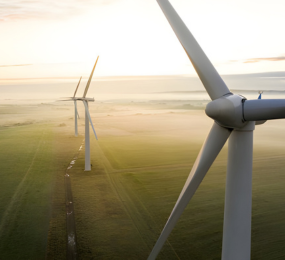
Offshore wind has long been recognized as a cornerstone of the clean energy transition, but traditional turbines anchored to the seabed face limitations. They can only be installed in relatively shallow waters, typically up to 60 meters deep. This restriction excludes vast areas of the ocean that hold immense wind energy potential. Floating wind technology is changing that reality, offering a new frontier for renewable energy development.
Moving Beyond Shallow Waters
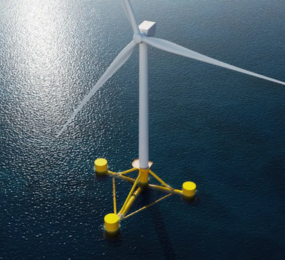
Floating wind turbines are mounted on buoyant platforms, tethered to the seabed with mooring lines and anchors. This design allows them to be deployed in waters up to several hundred meters deep areas previously inaccessible to conventional fixed-bottom turbines. By opening access to deeper offshore zones, floating wind dramatically increases the geographic scope of wind energy projects.
Technology and Engineering Feats
The engineering behind floating wind is a remarkable blend of maritime expertise and renewable innovation. Drawing from technologies developed for the oil and gas industry, platforms are designed to withstand harsh weather, high waves, and shifting currents. Three main designs are currently being tested and deployed: spar-buoys, semi-submersibles, and tension leg platforms. Each offers unique advantages depending on sea conditions, installation costs, and grid connection requirements.
Global Deployment and Momentum
Europe has taken the lead in floating wind deployment, with countries like the United Kingdom, Norway, and France piloting some of the first large-scale projects. Asia is not far behind, Japan, South Korea, and Taiwan are investing heavily, driven by limited shallow coastal areas and ambitious renewable targets. The United States, too, is advancing projects on the Pacific Coast, where deep waters make floating solutions more practical than fixed-bottom alternatives.
Challenges to Overcome
Despite its promise, floating wind is not without challenges. The cost of floating platforms, installation, and maintenance is still higher than traditional offshore wind. Grid connectivity from remote deep-water locations can also be complex. However, as deployment scales up and supply chains mature, costs are expected to decline significantly mirroring the trajectory of fixed-bottom offshore wind, which has seen dramatic cost reductions over the past decade.
A Path Toward Net-Zero
Floating wind is more than a technological advancement; it is a strategic enabler of global net-zero goals. By unlocking access to deeper waters with stronger and more consistent wind resources, it provides a steady supply of clean electricity that can complement other renewable sources. Moreover, it offers new opportunities for coastal communities, shipyards, and maritime industries to play a role in the energy transition.
Takeaway Point: Floating wind is expanding the horizons of offshore energy, making it possible to tap into wind resources far beyond shallow waters. While challenges remain, the momentum is clear floating wind has the potential to become a cornerstone of the clean energy future, driving both innovation and sustainability on a global scale.
Learn more on our website: https://www.leadventgrp.com/event/6th-annual-floating-wind-europe/register
For more information and group participation, contact us: [email protected]
Leadvent Group - Industry Leading Events for Business Leaders!
www.leadventgrp.com | [email protected]




Comment