

Scaling Circular Packaging with Biopolymer Technologies
The global packaging industry is undergoing a fundamental transformation as it seeks to decouple economic growth from plastic waste. While traditional recycling systems struggle with contamination and low recovery rates, biopolymer technologies have emerged as a scalable solution for achieving a truly circular economy. By utilizing renewable feedstocks and designing for end-of-life compatibility, these materials are redefining the lifecycle of modern packaging.
The Shift to Renewable Feedstocks
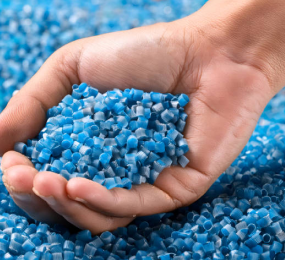
The foundation of circular packaging lies in the transition from fossil-based polymers to bio-based alternatives. Innovations in first and second-generation biopolymers—such as PLA (Polylactic Acid) derived from corn and PHA (Polyhydroxyalkanoates) produced by microbial fermentation—offer a carbon-neutral starting point. Unlike conventional plastics, which add "new" carbon to the atmosphere, biopolymers cycle atmospheric carbon, significantly reducing the industry’s upstream greenhouse gas emissions.
Overcoming the Scalability Gap
To move from niche applications to mass-market adoption, the industry is focusing on several key scaling innovations:
Barrier Performance Enhancements: One of the historical hurdles for biopolymers was their sensitivity to moisture and oxygen. New nanocomposite coatings and multi-layer biopolymer structures now provide the shelf-life stability required for food and medical packaging, rivaling the performance of PET and PE.
Drop-in Solutions: "Bio-based" versions of traditional plastics, such as Bio-PET or Bio-PE, allow manufacturers to use existing extrusion and molding machinery. These "drop-in" technologies facilitate rapid scaling without requiring massive capital investment in new production lines.
End-of-Life Infrastructure: Scaling also involves the "afterlife." Innovations in chemical recycling for biopolymers allow materials like PLA to be broken back down into monomers and repolymerized into virgin-quality material, creating a closed-loop system that bypasses the quality degradation seen in mechanical recycling.
Scaling circular packaging is not just a material science challenge; it is a systemic shift. By integrating biopolymer technologies with improved composting and chemical recycling infrastructure, the packaging sector can provide the functionality consumers expect while honoring the biological limits of our planet.
Visit our website to know more: https://www.leadventgrp.com/events/circular-packaging-biopolymer-summit/details
For more information and group participation, contact us: [email protected]
Leadvent Group - Industry Leading Events for Business Leaders!
www.leadventgrp.com| [email protected]




Comment