

Overcoming Technical Barriers in Biopolymer Packaging
The global push toward sustainability has placed biopolymers at the forefront of the packaging revolution. Derived from renewable resources like corn starch, cellulose, or seaweed, these materials offer a promising alternative to petroleum-based plastics. However, transitioning from conventional plastics to biopolymers isn't as simple as a one-to-one swap. Several technical hurdles—primarily involving barrier properties, thermal stability, and processing compatibility—must be overcome to make biopolymers a mainstream reality.
The Permeability Problem
The most significant challenge is the "barrier" itself. Traditional plastics like PET or HDPE are excellent at blocking oxygen and moisture. Many bio-based materials, such as Polylactic Acid (PLA), are naturally more permeable. This can lead to shorter shelf lives for food products due to oxidation or sogginess. To solve this, researchers are developing nanocomposite coatings and multi-layer structures. By incorporating tiny clay particles or bio-based "nano-fillers," manufacturers can create a "tortuous path" that makes it much harder for gas molecules to seep through.
Thermal and Mechanical Limitations
Biopolymers often struggle with high temperatures and brittleness. A bio-plastic coffee lid that melts under heat or a shipping film that tears easily is a non-starter. Chemical grafting and the use of eco-friendly plasticizers are currently being used to toughen these polymers and increase their heat deflection temperatures. Additionally, blending different types of biopolymers (like mixing PLA with PHA) allows engineers to "tune" the material’s properties, achieving a balance between strength and flexibility.
Scaling the Solution
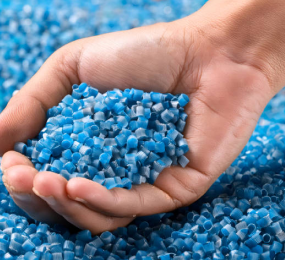
Finally, there is the issue of drop-in compatibility. Existing manufacturing lines are optimized for fossil-fuel plastics. Modern innovations in molecular weight distribution are ensuring that biopolymers can be processed using standard injection molding and extrusion equipment without requiring multi-million dollar machinery overhauls.
As material science advances, the gap between "green" and "functional" is closing. By refining these molecular structures, the industry is moving toward a future where sustainable packaging doesn't just protect the planet—it protects the product just as effectively as its predecessors.





Comment