

Introduction
The global agricultural sector is experiencing a rapid transformation in 2025, driven by the need to produce more food while managing climate challenges and water scarcity. One of the most promising solutions is agrivoltaics, a system where crops are cultivated under solar panels. When combined with smart irrigation, advanced sensing technologies, and data analytics, this approach creates a sustainable model for farming that maximizes both energy and crop yield. The rising interest in such technologies has also made agrivoltaics a key highlight at every major solar energy event this year.
What is Agrivoltaics?
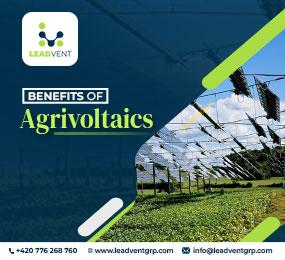
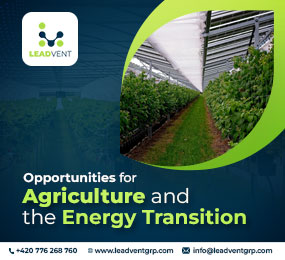
Agrivoltaics (also referred to as agrisolar) involves integrating photovoltaic panels with agricultural land, allowing farmers to generate solar power while continuing crop cultivation. Instead of competing for land, agriculture and renewable energy coexist, providing dual benefits—food security and clean energy production.
Why Smart Irrigation Matters
Water scarcity affects over 40% of global farmland. Traditional irrigation often leads to water wastage. Smart irrigation systems, powered by IoT sensors, ensure that crops receive precise water amounts based on soil moisture and weather conditions. When paired with agrivoltaics, the shading effect of panels reduces evaporation, making water use even more efficient.
Role of Sensing Technologies
Sensors play a vital role in monitoring soil health, plant stress levels, and microclimatic changes under solar panels. By gathering real-time data, farmers can optimize growing conditions. These sensors also help determine which crops thrive best under shaded conditions, making agrisolar farming more adaptable.
Power of Data Analytics
The combination of sensing and big data analytics enables predictive insights. By analyzing patterns of sunlight, temperature, and crop yield, farmers can make informed decisions on crop rotation, irrigation schedules, and panel adjustments. This integration increases efficiency and reduces input costs.
Benefits of Agrivoltaics with Smart Tech
- Higher productivity: Crops and energy are produced on the same land.
- Water conservation: Smart irrigation saves up to 30–40% water.
- Climate resilience: Shaded crops withstand heat stress better.
- Improved soil health: Reduced evaporation maintains soil moisture.
- Renewable income: Farmers gain additional revenue from solar energy.
Agrivoltaics at the Center of Solar Energy Events
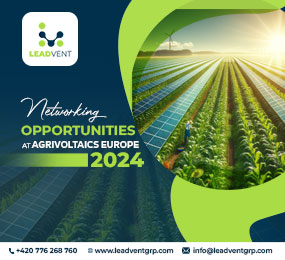
In 2025, major solar energy event conferences are focusing heavily on agrivoltaics. These platforms showcase real-world case studies, highlight advances in sensing technologies, and discuss financing models for large-scale adoption. Countries like India, the U.S., and Japan are already scaling pilot projects into mainstream solutions.
Future Outlook
By 2030, experts predict that agrivoltaics could cover up to 10 million hectares globally, contributing significantly to renewable energy goals while supporting sustainable agriculture. With the integration of AI-powered data analytics, precision irrigation, and IoT, the model is set to revolutionize food and energy security.
FAQs
Q1. What crops grow best under agrivoltaics?
Crops like tomatoes, peppers, leafy greens, and certain grains perform well, as they thrive under partial shade and controlled conditions.
Q2. How does agrivoltaics improve water use?
The shading from solar panels reduces evaporation, while smart irrigation delivers precise amounts of water, resulting in up to 40% water savings.
Q3. Is agrivoltaics only for large farms?
No. Small farms can also benefit by installing modular solar setups and adopting cost-effective smart irrigation systems.
Q4. What role do data analytics play in agrivoltaics?
Data analytics provide insights into soil health, crop performance, and energy production, helping farmers make better decisions.
Q5. Why is agrivoltaics highlighted at solar energy events?
Because it aligns renewable energy with agriculture, offering a scalable, sustainable solution that attracts policymakers, researchers, and investors alike.







Comment