

The Deep-Sea Engineering That Keeps the World Connected
Cable failures account for around 80-83% of insurance claims in offshore wind projects. That single figure tells you everything about where the subsea industry's real pressure points lie.
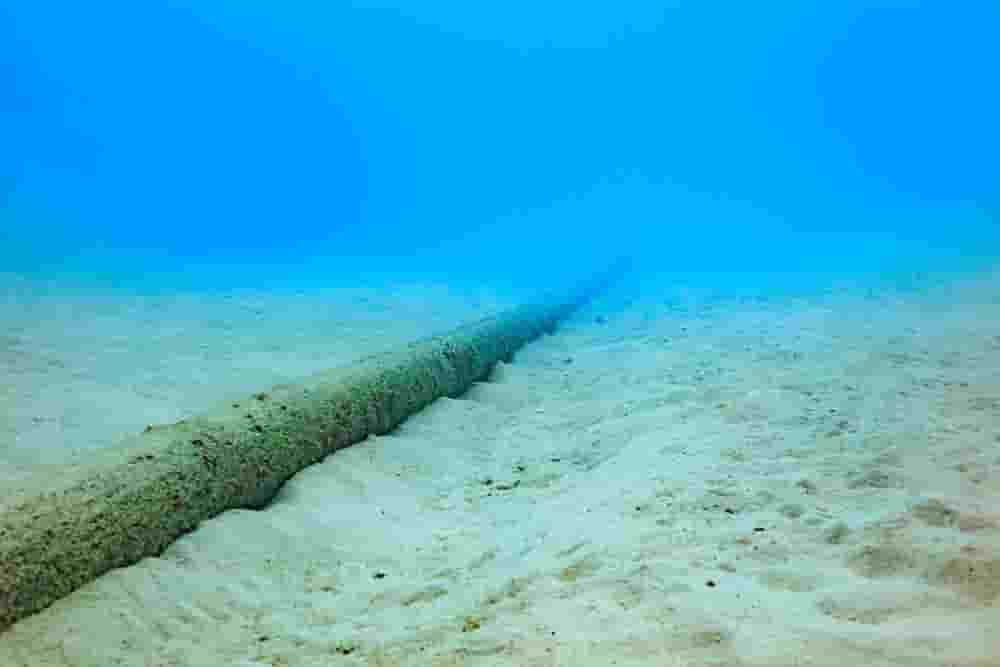
Designing and laying a submarine cable is only part of the challenge. What follows is harder: keeping it buried correctly (typically 0.5-3m depth in shallower waters under 1,500m, or surface-laid beyond 8,000m), managing risk as the seabed shifts, cutting repair costs ($1.8-30 million per incident, including downtime), extending the cable's working life, and maintaining performance across decades in an inaccessible deep-sea environment.
These are not future problems. They are active ones, and the industry is still working through them.
Geohazards, anchor strikes, poor burial depth, inadequate maintenance programmes, and the absence of fully standardised risk assessment methods all contribute to failures that disrupt energy supply and connectivity for millions. Understanding how cables are built to handle these conditions, and where the current gaps in practice lie, is where better outcomes begin.
Built from the Core Out
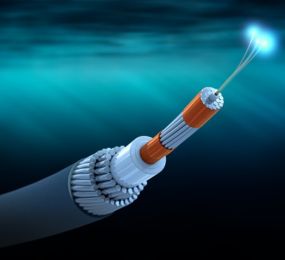
At the heart of every cable sits the conductor, typically stranded copper, which carries electrical current or data signals. Engineers then wrap several key layers around this core:
- Optical fibers for high-bandwidth data transmission
- Polyethylene insulation to prevent electrical leakage
- Water-blocking compounds that stop seawater from travelling along the cable's length if the outer sheath is ever breached
The armor system comes next, and this is where the design diverges based on depth.
- In shallow water zones (under 1,000 meters), single or double layers of galvanized steel wire armor guard against anchors, trawl gear, and wave-driven forces near coastlines.
- In deep water zones, engineers replace heavy steel with lightweight synthetic fibers such as aramid (Kevlar®), delivering tensile strength without the added weight that strains the cable during installation.
The outermost polyethylene sheath then forms the final waterproof and abrasion-resistant barrier against saltwater corrosion.
Engineering Against Pressure and Weight
At depths beyond 8,000 meters, the ocean exerts pressure more than 800 times that of the surface. Engineers put every ultra-deep cable through immersion simulations that replicate ambient sea pressure. The goal is to confirm zero water ingress across all internal layers.
Tensile load is just as demanding. During installation, a subsea cable must bear its own weight as it hangs from a laying vessel down to the ocean floor across several kilometers. It must do this without elongating or snapping. In a landmark project connecting Crete to the Peloponnese, an aramid-armored cable cut installation reduced tension by approximately 46%. It also weighed nearly 47.5% less than a conventional steel-armored equivalent. That achievement has since opened the door to deeper and longer interconnections worldwide.
Route Intelligence: Planning Around Nature
Structural resilience alone is not enough. Long before manufacturing begins, geophysical surveys map every kilometer of the proposed route. Engineers look for:
- Seabed composition and sediment movement
- Known seismic fault zones and volcanic areas
- Zones of strong underwater currents
- Active fishing grounds and busy shipping corridors
In soft-seabed areas, teams bury cables up to two meters deep using high-pressure water jet systems. In rocky zones, crews lay hard protective covers such as concrete slabs over exposed sections. Smart routing combined with strategic burial cuts the risk of external damage significantly. External damage remains the leading cause of cable failures worldwide.
Biological and Chemical Threats
The ocean is far from a sterile environment, and some of its hazards are surprisingly organic.
Shark interference is a documented risk. Sharks are drawn to the low-frequency electromagnetic fields that cables emit and have been known to bite through outer sheaths. In high-risk zones, manufacturers add hardened steel tape spiral jackets beneath the outer sheath as a deterrent.
Hydrogen ingress is a subtler but equally serious problem. Hydrogen molecules form through electrochemical reactions in seawater and gradually migrate into the cable structure, degrading fiber performance over time. Manufacturers counter this with hermetic metallic barriers and carefully selected materials that block both external hydrogen infiltration and any hydrogen the cable generates internally.
Long-Term Reliability: Managing What You Cannot See
Once a cable is in the water, the focus shifts to subsea cable asset management: keeping infrastructure running on the ocean floor, often thousands of kilometers from the nearest port.
Modern systems rely on distributed fiber optic sensing to monitor in real time:
- Temperature and strain variations along the full cable length
- Acoustic events that may point to nearby seismic activity or fishing gear contact
- Performance anomalies that signal early-stage degradation
Teams deploy machine learning platforms to analyze this data and identify failure-prone segments before they become costly problems. ROVs and autonomous underwater vehicles (AUVs) run scheduled inspections, making preventive maintenance possible without recovering or replacing the cable.
When faults do occur, most stem from anchor strikes or fishing trawls in shallow coastal zones. Specialist repair vessels then mobilize, locate the fault, recover the cable, splice in a new segment, and redeploy it within weeks.
Meet the Industry at Leadvent Group's 6th Annual Forum
Understanding how cables are built is one thing. Knowing how to install them efficiently, manage their performance over decades, and reduce the cost of failure is where the real work happens.
The 6th Annual Subsea Cable Installation Asset Management Reliability Forum, organized by Leadvent Group, brings that work to the table. The event takes place on 29–30 April 2026 at Amsterdam Airport Schiphol, Netherlands, and is designed specifically for professionals who operate at the sharp end of subsea infrastructure.
Over two days, participants can expect:
- Direct access to 32+ expert speakers who bring hands-on experience from offshore wind, power transmission, and marine engineering
- Focused technical sessions covering continuous risk assessment, cable burial and route optimization, cost reduction strategies, repair methodology, O&M best practices, and life extension
- Real-world case studies that move beyond theory and address the challenges teams face on live projects
- Interactive workshops that allow participants to work through problems, compare approaches, and leave with practical takeaways
- Networking with 150+ pre-qualified industry professionals across the full subsea value chain
Whether you are managing ageing cable infrastructure, planning a new offshore installation, or developing the next generation of subsea cable asset management tools, this forum connects you with the people and knowledge that move the industry forward.
Frequently Asked Questions (FAQs)
1. Why do submarine cables use different armour in shallow versus deep water?
Shallow zones face constant threats from anchors and fishing gear, so cables need heavy steel-wire armour. Deeper down, those risks drop sharply, and engineers switch to lightweight synthetic fibers like aramid, which cut installation weight and tension without losing tensile strength.
2. How does a cable buried on the seabed get repaired if it breaks?
A specialist repair vessel deploys ROVs and grapnel equipment to raise the damaged section to the surface. The crew removes the faulty segment, splices in a new section, and lowers the repaired cable back to the seabed, usually within several weeks.
3. Can real-time monitoring actually predict a cable failure before it happens?
Yes. Distributed fiber optic sensing tracks temperature, strain, and acoustic signals continuously along the cable. Machine learning tools then analyze that data and flag early warning signs, such as unusual seabed movement or insulation degradation, before a full fault develops.
4. What makes deep-water cable installation so technically challenging?
The cable carries its own weight as it descends from the laying vessel to depths of several kilometres, all while facing hydrostatic pressure above 800 atmospheres. Engineers must strike a precise balance between armor weight, tensile capacity, and flexibility to lay the cable safely without overstressing it.



Comment