

The Role of ESG in Attracting Foreign Direct Investment to Africa
In the global financial landscape of 2026, Environmental, Social, and Governance (ESG) criteria have evolved from a secondary compliance checklist into the primary engine for Foreign Direct Investment (FDI) into Africa. As international capital markets tighten their sustainability requirements, African nations are increasingly leveraging ESG frameworks to bridge the continent’s significant infrastructure and development funding gaps.
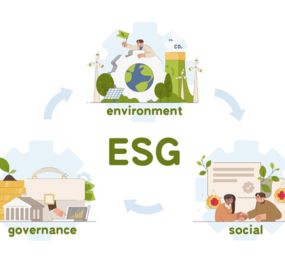
Environmental Stewardship: The Green Magnet
The "E" in ESG has become a massive draw for investors focused on the global energy transition. Africa’s vast potential in green hydrogen, solar, and critical minerals like lithium and copper has positioned countries such as Morocco, Mauritania, and Zambia as strategic partners. Investors are no longer just looking for resources; they are seeking "green-labeled" projects that help them meet their own net-zero mandates. By implementing transparent carbon-accounting and conservation policies, African markets are reducing "greenwashing" risks and attracting multi-billion dollar climate-linked funds.
Social Impact and Community Stability
Social criteria focus on workforce welfare and community engagement. In Africa, robust "S" practices serve as a vital de-risking tool. Investors prioritize markets where companies ensure fair labor practices and inclusive growth, as these factors directly correlate with operational stability. Impact-linked finance—where interest rates are tied to achieving social targets like gender equity or local skill development—is gaining traction in hubs like Kenya and Nigeria, making these markets more attractive to ethical institutional investors.
Governance: The Bedrock of Trust
Governance remains the most critical factor for institutional trust. Strengthening the "G" through anti-corruption measures and the adoption of international standards, such as the ISSB (International Sustainability Standards Board), mitigates the "institutional void" often perceived by foreign firms. Leading reformers like Rwanda and Mauritius have demonstrated that high governance scores lead to lower capital costs and sustained investor interest.
Ultimately, ESG is reframing the African investment narrative from one of high risk to one of measurable, sustainable impact. By aligning national policies with global ESG standards, Africa is transforming its abundant natural and human capital into a competitive value proposition for the 21st century.
Visit our website to know more: https://www.leadventgrp.com/events/2nd-annual-world-esg-and-climate-summit/details
For more information and group participation, contact us: [email protected]
Leadvent Group - Industry Leading Events for Business Leaders!
www.leadventgrp.com [email protected]















Comment
Filemón Esteban López Pérez
August 10, 2026
Saludos desde las Islas Canarias...