

Overhead or Underwater: How the Energy Grid is Evolving
The global energy transition is reshaping how electricity moves around the world, not just above ground but deep beneath the ocean. As offshore wind farms multiply and nations look to share renewable power across borders, a fundamental choice emerges: traditional overhead power lines or the rapidly evolving world of Subsea Power Transmission. Both technologies have a role to play, but their strengths and limitations differ considerably.
The Case for Going Underwater
Traditional overhead transmission lines have served the energy sector for over a century. They are cost-effective to build and capable of carrying large amounts of power across long distances. For landlocked regions with established grid infrastructure, they remain the default choice.
That said, overhead lines carry inherent vulnerabilities:
- Weather exposure: Storms, wildfires, and ice loading have triggered major blackouts across North America, Europe, and Asia.
- Land corridor requirements: Wide easements create planning disputes and face growing public resistance.
- Electromagnetic concerns: Proximity to high-voltage lines fuels ongoing health and safety debates in communities.
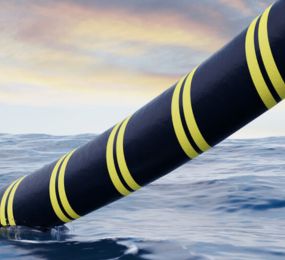
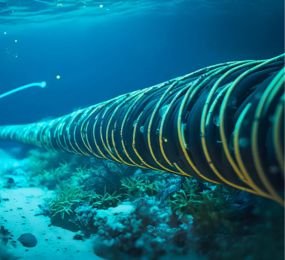
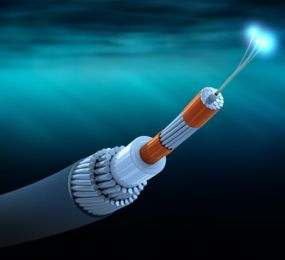
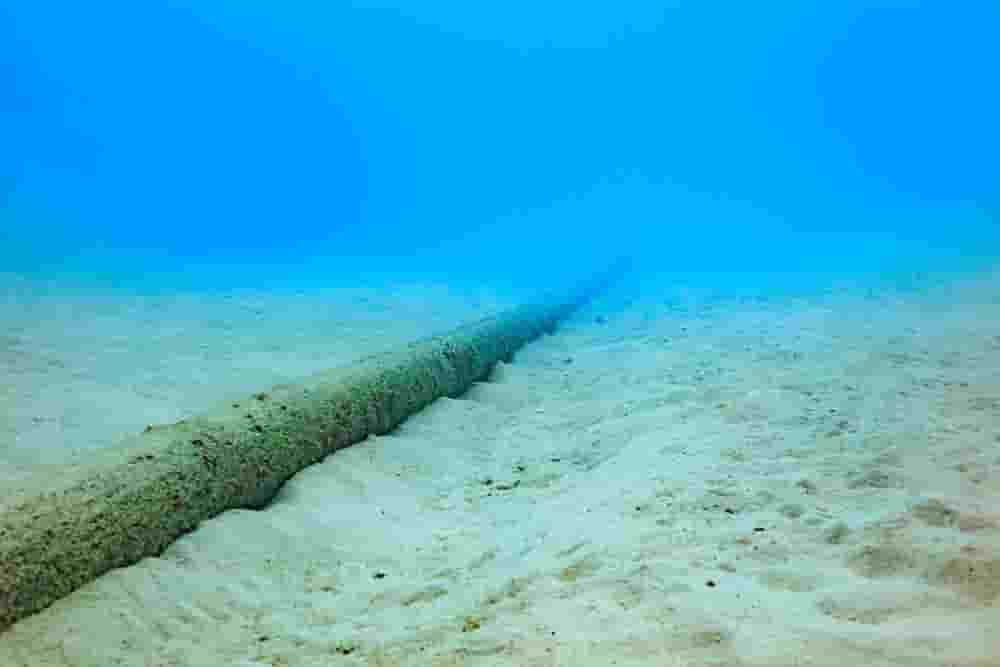
Once engineers install and bury a submarine cable into the seabed, it faces none of these atmospheric hazards. This makes marine cable routes fundamentally more resilient over the long term.
Efficiency Over Distance: The HVDC Advantage
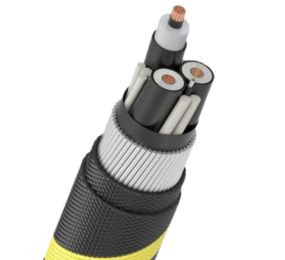
Traditional AC overhead lines lose energy through resistance over long distances. Submarine cable systems using High Voltage Direct Current (HVDC) technology address this directly:
- No capacitive current build-up: HVDC is the preferred choice for routes exceeding 100 kilometres, free from the distance constraints that limit AC cables.
- Lower energy losses: HVDC eliminates voltage drop from parasitic inductance and capacitance, delivering more stable grid operation.
- Cross-border flexibility: HVDC connects asynchronous AC grids, allowing countries to exchange renewable energy that would otherwise be technically incompatible.
The 720-kilometre NordLink cable, linking Norwegian hydropower to German wind energy, moves up to 1,400 MW across national borders. Overhead AC infrastructure cannot replicate this at equivalent distances.
Environmental and Social Advantages
Subsea cable routes deliver benefits beyond electrical performance:
- No land corridor required: Routing power under the sea removes the need for thousands of landowner easements and eliminates the visual disruption of pylons across natural landscapes.
- Lower electromagnetic fields: Buried cables produce significantly lower EMF levels than overhead lines, reducing community health concerns.
- Enabling offshore renewables: Offshore wind, tidal, and wave energy cannot reach onshore grids without marine cable infrastructure. Subsea investment unlocks entirely new renewable energy categories.
The Challenges That Cannot Be Overlooked
Installation Complexity and Cost
Laying a subsea power cable is a specialised and expensive undertaking:
- Detailed geophysical seabed surveys must identify seismic zones and high-traffic corridors before planning begins.
- Cable-laying vessels cost hundreds of thousands of dollars per day to operate.
- HVDC links require large converter stations at each terminal, with no equivalent cost in overhead transmission.
- Environmental assessments and regulatory approvals alone can span several years.
Fault Detection and Repair
Overhead line faults are often located visually within hours. Undersea faults are far more complex. Teams must mobilise Remotely Operated Vehicles (ROVs) and repair vessels, a process that can take weeks. Distributed Fiber Optic Sensing (DFOS) gives operators real-time warnings of threats like anchor drags before a breach occurs.
External Aggression and Seabed Hazards
External threats cause most submarine cable failures, not material degradation:
- Fishing trawl gear and dragging anchors are the leading culprits in shallow coastal waters.
- Geological hazards such as seabed landslides and seismic activity create risk in deeper waters.
- Deliberate sabotage is a growing concern in geopolitically sensitive regions.
Effective defences include deep burial, optimised routing through seabed mapping, and continuous real-time monitoring.
A Complementary Future, Not a Binary Choice
The real question is not overhead lines versus subsea cables, but which technology suits which application. Overhead lines will remain practical for most inland routes. For cross-sea interconnections, offshore wind integration, and long-distance renewable energy export, submarine cable infrastructure is often the only viable option. Both require sustained investment in innovation and skilled workforces to meet the pace of the energy transition.
The Forum Where These Decisions Get Made
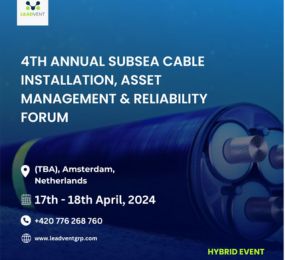
These are live industry debates, and the 6th Annual Subsea Cable Installation, Asset Management and Reliability Forum, organised by Leadvent Group, is where the industry works through them together.
Leadvent Group is one of the most respected organisers of specialist energy conferences globally. The forum brings together pre-qualified engineers, asset managers, and decision-makers to address:
- Cable burial and route optimisation to reduce exposure to external threats
- Asset management and life extension to maximise the 30 to 40-year cable design life
- Monitoring and inspection technologies including DFOS and ROV inspection advances
- Risk management and long-term reliability across subsea infrastructure
Visit the official Leadvent Group event page to register, download the brochure, or get in touch about speaking and sponsorship opportunities.
Frequently Asked Questions (FAQs)
- What is the main difference between HVAC and HVDC submarine cables?
HVAC suits shorter distances under 100 kilometres using standard transformer technology. HVDC suits longer routes, avoiding capacitive current constraints, and delivers lower energy losses over long-distance connections despite higher converter station costs.
- Why are subsea cables more expensive to install than overhead lines?
Installation requires specialist vessels, seabed surveys, ROV-assisted burial, and HVDC converter stations at each terminal. Upfront costs are significantly higher, though long-term resilience and reduced maintenance can offset the investment over a 30 to 40-year asset life.
- What are the most common causes of subsea cable failure?
External aggression causes most failures. Fishing gear and dragging anchors are the leading culprits in shallow waters, while geological hazards create risk in deeper waters. Deep burial, optimised routing, and DFOS-based monitoring are the primary defences.
- How long do subsea power cables last, and how are they maintained?
Subsea power cables carry a design life of 25 to 40 years. Maintenance focuses on prevention through real-time DFOS monitoring. When repairs are necessary, specialist vessels and ROVs handle the work, which can take several weeks depending on depth and conditions.




Comment