

Powering the Giants: Future Trends in High-Power and Megawatt Charging Systems
As the automotive industry masters the electrification of passenger vehicles, the frontier has shifted toward heavy-duty transport, aviation, and maritime vessels. The transition from Kilowatt (kW) to Megawatt (MW) charging represents more than just a scale-up; it is a fundamental re-engineering of power delivery and thermal management.
The Rise of the Megawatt Charging System (MCS)
The MCS standard is the cornerstone of this evolution, designed to deliver up to 3.75 megawatts (3,000 amps at 1,250 volts). This leap is essential for Class 8 heavy-duty trucks, which require massive battery packs (500kWh to 1MWh) to be charged within a mandatory 30-minute driver break. Future trends indicate a shift toward standardized robotic connection interfaces to handle the physical weight and safety requirements of these high-current cables.
Advanced Thermal Management: Liquid-Cooled Infrastructure
At megawatt scales, heat is the primary adversary. The industry is moving beyond traditional air cooling toward sophisticated dual-circuit liquid cooling systems. These systems cool both the charging station's power electronics and the cable/connector assembly itself. Emerging research into "phase-change" cooling materials and immersion-cooled battery packs within the vehicles will further push the boundaries of how much current can be safely injected without degradation.
Grid-Edge Intelligence and Local Storage
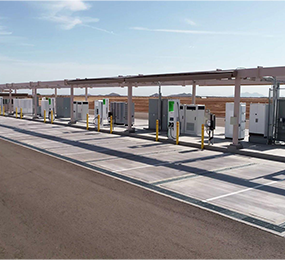
A single megawatt charger places a demand on the grid equivalent to a small village. To mitigate this, the "Charging Hub of the Future" will act as a microgrid. We are seeing a trend toward integrating massive stationary Battery Energy Storage Systems (BESS) and onsite solar arrays. These buffers "shave" peak loads, drawing power slowly from the grid and discharging it rapidly during a charging session, ensuring grid stability and lowering operational costs.
Bidirectional Megawatt Power (V2X)
The final frontier is the integration of high-power vehicles into the energy market. With megawatt-scale batteries, a fleet of electric trucks becomes a mobile power plant. Future systems will utilize bidirectional charging (V2G), allowing heavy-duty fleets to provide emergency backup power to hospitals or stabilize the grid during frequency fluctuations, turning a logistical asset into an energy asset.
Visit our website to know more: https://www.leadventgrp.com/events/4th-annual-ev-charging-infrastructure-forum/details
For more information and group participation, contact us: [email protected]
Leadvent Group - Industry Leading Events for Business Leaders!
www.leadventgrp.com| [email protected]






Comment