

Navigating the Maze: Challenges in Permitting and Regulatory Approval for AgriVoltaics Projects
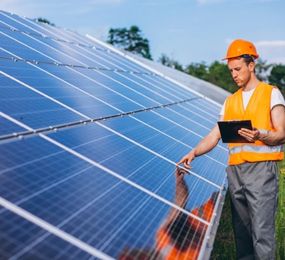
AgriVoltaics—the dual-use of land for both solar energy production and agriculture—represents a frontier in sustainable development. However, despite its potential to harmonize food and energy security, the sector faces a daunting "permitting bottleneck." Current regulatory frameworks, designed for a binary choice between farming and industry, are often ill-equipped to handle hybrid systems.
The Zoning Paradox
The primary hurdle is land-use classification. Most local jurisdictions categorize land as either "Agricultural" or "Industrial/Commercial." When a developer proposes an AgriVoltaic installation, regulators often struggle to determine if the land remains a farm. In many regions, installing solar panels triggers a mandatory "re-zoning," which can strip the landowner of agricultural tax incentives or violate "Right-to-Farm" protections. This lack of a dedicated "dual-use" zoning category leads to lengthy delays and increased legal costs.
Ambiguous Standards and Performance Metrics
Unlike traditional ground-mounted solar, there is no universal standard for what constitutes a "functional" AgriVoltaic site. Regulators are often wary of "greenwashing," where a developer might plant a few crops under panels simply to bypass strict solar regulations. Consequently, permitting authorities are increasingly demanding complex "Agricultural Integration Plans." These plans require proof that light levels, water runoff, and soil health will remain sufficient for crop yields—data that is often expensive to collect and subject to inconsistent interpretation by different local boards.
Grid Interconnection and Environmental Review
Beyond land use, AgriVoltaics projects often face the same grid-tie challenges as large-scale solar, compounded by their rural locations. Environmental impact assessments often fail to account for the unique ecological benefits of dual-use, such as increased pollinator habitats or reduced water evaporation.
To unlock the full potential of AgriVoltaics, a transition toward "outcome-based" regulation is essential, where the preservation of agricultural productivity is incentivized alongside renewable energy generation.
Visit our website to know more: https://www.leadventgrp.com/events/5th-annual-agrivoltaics-europe/details
For more information and group participation, contact us: [email protected]
Leadvent Group - Industry Leading Events for Business Leaders!










Comment