

Unlocking the Deep: A New Era for Offshore Energy
Wind turbines spinning miles offshore have become a familiar sight, but the real engineering challenge isn't visible above the waterline. As renewable power moves into deeper ocean areas, a fresh type of infrastructure is being developed. This innovation skips anchoring to the seabed. Floating offshore wind substations change the way power is gathered and sent from offshore operations, making it possible to use ocean areas once seen as too deep or too costly to access.
Breaking Free from Shallow Water Constraints
Fixed offshore wind foundations face major challenges at water depths of 60 to 80 meters. Building stable structures becomes both hard to manage and too expensive beyond this depth. This issue has restricted the use of large ocean areas. It affects regions like the Atlantic and Pacific coasts, the Mediterranean Sea, and much of the Asia-Pacific, where water depths reach several hundred meters.
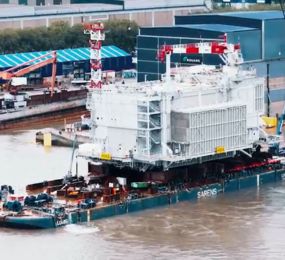
Floating offshore wind substations solve this puzzle by doing exactly what their name suggests: they float. These platforms serve as central electrical hubs for offshore wind farms, collecting power from multiple turbines, transforming voltage levels, and transmitting electricity to shore through dynamic cables. Unlike their fixed counterparts anchored rigidly to the seabed, floating platforms use sophisticated mooring systems that allow them to respond to ocean conditions while maintaining stable electrical operations.
Engineering Innovation Meets Practical Design
The challenges of making floating offshore substations are more than keeping them above water. These platforms face constant movement caused by waves, winds, and currents for lifetimes that stretch between 25 and 30 years. Engineers have developed several foundation concepts to address these demands:
- Semi-submersible platforms that use buoyancy and ballast for stability.
- SPAR platforms use deep-draft cylinders that stretch far below the water's surface.
- Tension Leg Platforms (TLPs) that use vertical tethers to minimize motion.
What makes this particularly exciting for the industry is the cost trajectory. Recent innovations in subsea technology are driving down expenses significantly. Subsea substations use 80-90% less material than topside designs, potentially reducing costs by around 10% for a 1 GW floating offshore wind park. Meanwhile, 66 kV Subsea Collectors are cutting cable copper usage by 50-60%, making these systems increasingly competitive with traditional approaches.
The grid integration side has also seen major progress. Engineers now focus on creating HVDC transmission systems built to handle the tough conditions of floating platforms. This ensures stable power supply even during harsh weather at sea.
Navigating Challenges on the Path Forward
Though the progress looks encouraging, floating offshore wind substations are still in the early phases of being used. The figures highlight this reality. A single floating offshore substation has been set up worldwide. It was installed in Japan in 2013. This is shifting, however.
The industry must find a middle ground between sticking to standards and encouraging new ideas. Rushing into heavy standardization might limit creative engineering, but delaying it too long could turn projects into unique, expensive efforts without reaping the benefits of scaling up. Striking this balance will be critical as growth speeds up.
And acceleration is exactly what's coming. Industry projections anticipate 250 GW of floating wind capacity by 2050. To support that growth, the sector will need 8-10 substations of 2 GW each annually from 2035 to 2050. That's an enormous scale-up from current levels, requiring not just technological refinement but also supply chain development, workforce training, and regulatory frameworks that can keep pace.
Join the Conversation Shaping Tomorrow's Energy Infrastructure
Floating offshore wind substations aren't just unlocking new ocean territories for renewable energy—they're fundamentally redefining what's possible with offshore foundations. The transition from fixed to floating architectures represents one of the most significant engineering shifts in the renewable energy sector.
These advances don't happen in isolation. They require collaboration among engineers, developers, policymakers, and technology providers willing to share knowledge and tackle challenges together. That's precisely why events like the 2nd Annual Offshore and Floating Substations Forum matter so much.
Organized by Leadvent Group, this offshore foundations conference brings together the minds driving offshore energy innovation forward. Taking place on November 20, 2025, in London, the forum offers a dedicated platform for exploring the latest developments in floating offshore wind substations, from technical design considerations to operational strategies and grid integration solutions.
If you are working in substation engineering offshore developments, or creating energy policies, this event gives direct insights into projects new technologies, and networks that help turn ideas into real-world infrastructure. With the move toward deeper waters already underway, discussions at this conference will shape how the industry navigates this major change.
Frequently Asked Questions (FAQs)
- What are floating offshore wind substations?
These are platforms set up on floating structures that handle collecting, converting, and sending power generated by offshore wind turbines in areas with deep water where fixed-bottom foundations can't be used.
- Why are floating substations necessary for offshore foundations?
They make it possible to develop wind energy in water deeper than 60 to 80 meters. This opens access to 80% of offshore regions where fixed foundations aren't cost-effective.
- What are the main challenges facing floating offshore wind substations?
Major issues include handling constant platform movement over many years cutting costs to stay competitive, creating dependable dynamic cable systems, and boosting production to keep up with increasing demand.




Comment