

Connecting Offshore Wind to Shore
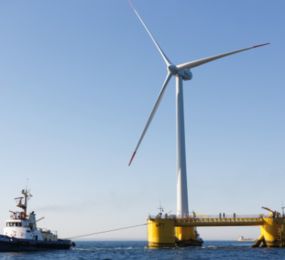
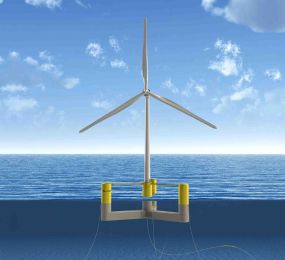
Global offshore wind capacity crossed 83 gigawatts in 2024—enough to power approximately 73 million homes. Yet behind this remarkable achievement lies a growing tension: the infrastructure connecting these offshore installations to mainland grids is struggling to keep pace. While turbine technology has advanced rapidly and projects are pushing into deeper waters, the transmission networks tasked with delivering this clean energy remain a critical bottleneck. Floating offshore wind substations represent the next frontier, particularly for the 80% of offshore wind resources located in waters beyond 60 meters deep. But getting electrons from a platform bobbing in ocean swells to a stable onshore grid involves challenges that extend far beyond engineering textbooks.
The Technical Infrastructure Hurdle
Getting power from a floating platform in the middle of the ocean to homes and businesses onshore isn't straightforward. One of the first decisions developers face is choosing between HVDC (High Voltage Direct Current) and HVAC (High Voltage Alternating Current ) for offshore wind power transmission. HVDC generally wins out for longer distances—typically beyond 80-100 kilometers—because it minimizes power losses. But this choice brings its own complications.
Power electronic converters used in these systems can create power quality issues that ripple through the network. When you add the constant motion of floating offshore wind substations to the equation, maintaining voltage and frequency stability becomes even trickier. The platforms move with waves and currents, which means every component must tolerate this dynamic environment.
Then there's the cabling challenge. Dynamic cables connecting floating substations need to flex continuously without failing, all while submerged in corrosive saltwater. Cable fatigue becomes a legitimate concern when these systems are expected to operate for 25-30 years in some of the harshest conditions on Earth.
Grid Connection Bottlenecks
Even the most efficiently generated offshore wind power hits a wall if the onshore grid can't handle it. Many coastal transmission networks weren't designed to absorb the massive influx of electricity that modern wind farms produce. This creates a bottleneck effect—the power is ready, but there's nowhere for it to go.
Strategic placement of grid connection points becomes critical. Developers must balance the ideal location for wind resources against the practical realities of where robust transmission infrastructure exists. This often means compromising on one factor or the other.
Distance compounds the problem. When offshore wind power transmission infrastructure must stretch 100 kilometers or more, the costs escalate quickly. Every additional kilometer means more potential for power loss and higher capital expenditure. The economics need to stack up, which isn't always guaranteed when you're building in remote offshore locations.
Keeping Systems Reliable
Fault management in offshore wind power transmission networks operates on a different level of complexity. When a fault occurs—whether at the wind turbine, the substation, or somewhere along the transmission line—the system needs to respond appropriately without cascading failures. Modern MMC-HVDC (Modular Multilevel Converter) systems have improved fault ride-through capabilities, but challenges remain.
The operational reality of floating offshore wind substations adds another layer of difficulty:
Access for maintenance depends entirely on weather windows
Repairs can be delayed by days or weeks during storm seasons
Remote locations require specialized vessels and equipment
Component failures have longer resolution times compared to onshore facilities
These factors directly impact system reliability and operational costs.
The Policy and Investment Gap
Technical challenges are only part of the story. The lack of standardized grid codes for offshore wind power transmission creates uncertainty for developers. What works in one jurisdiction might not meet requirements in another, complicating international projects and technology transfer.
Investment planning is full of difficulties, keeping up with the ambitious government targets. When there are government policies that guarantee the production of gigawatts of offshore wind installations, but the necessary transmission infrastructure is not financed or built at the same time, then there will inevitably be bottlenecks. In most markets, the process of creating coordinated frameworks that bring together generation capacity and grid development is still in the making.
Moving Forward Together
These challenges aren't insurmountable—they're solvable. The industry has already demonstrated remarkable innovation in substation design, transmission technology, and grid management strategies. What's needed now is a coordinated effort across the entire value chain.
This is precisely where platforms like Leadvent Group's 2nd Annual Offshore and Floating Substations Forum become invaluable. Taking place on November 20, 2025, in London, the forum brings together the engineers, policymakers, developers, and innovators who are actively shaping offshore electrical infrastructure. It's where theoretical solutions meet practical application, where challenges get discussed openly, and where collaborative pathways forward are forged.
As floating offshore wind substations transition from demonstration projects to commercial reality, addressing grid integration challenges will determine the pace of offshore wind deployment globally. The technical expertise exists—what matters now is bringing it together effectively.
Frequently Asked Questions
- What is the main challenge in offshore wind power transmission?
The main challenge lies in juggling several opposing needs. These include keeping technical systems reliable, reducing power losses when transmitting across long distances, staying within the limits of current grid capacity, and maintaining stable voltage. On top of all that, developers and ratepayers must find a way to make it practical.
- Why are floating offshore wind substations necessary?
Fixed-bottom offshore structures become impractical or impossible in waters deeper than 60 meters. Since about 80% of offshore wind energy resources are found in these deeper waters, floating offshore wind substations play a critical role in unlocking this massive renewable energy potential.
- How do HVDC systems improve offshore wind power transmission?
HVDC technology significantly reduces electrical losses during long-distance transmission, particularly for distances exceeding 80-100 kilometers. It also provides superior control capabilities for managing power flow and maintaining grid stability compared to traditional AC systems.
- What role do industry forums play in addressing these challenges?
Forums act as key platforms to exchange ideas and learn. They let professionals share hands-on experiences, present new technologies, and work together to find solutions. These gatherings link the engineers creating systems with the people funding, governing, and studying them, boosting the entire industry's growth.











Comment