

Floating Wind: Expanding the Horizon of Renewable Energy
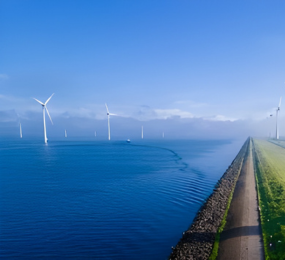
As the world accelerates its transition toward cleaner energy, floating wind power is emerging as one of the most promising frontiers in renewable technology. Unlike traditional offshore wind farms fixed to the seabed, floating wind turbines rest on buoyant platforms anchored to the ocean floor. This breakthrough allows them to operate in deeper waters, where winds are stronger and more consistent turning previously unreachable areas into sources of sustainable energy.
Floating wind represents more than just an evolution of offshore wind, it’s a revolution in accessibility and scalability. Countries with deep coastal waters, such as Japan, Norway, and the United Kingdom, are investing heavily in this innovation. For these nations, the ability to harness energy farther from shore without the need for fixed foundations opens up vast new opportunities for clean power generation.
The Technology Beneath the Surface
The engineering behind floating wind systems is both elegant and complex. Each turbine is mounted on a floating platform often semi-submersible, spar-buoy, or tension-leg designs, designed to remain stable even in rough sea conditions. These platforms are tethered to the seabed by mooring lines, allowing the entire structure to move slightly with waves and currents while maintaining position and efficiency.
This flexibility brings significant environmental and logistical benefits. Floating wind farms can be installed in regions where traditional foundations are impossible due to depth or seabed composition. They also reduce the visual impact from shore and can be easily relocated or upgraded as technology advances.
A Catalyst for Decarbonization
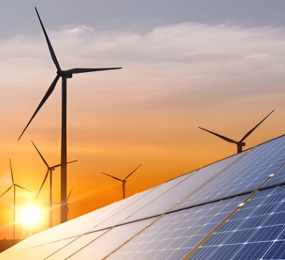
Floating wind aligns closely with global decarbonization goals. By expanding the geographical reach of offshore wind, it enables nations to generate more renewable power without competing for land use a growing challenge in densely populated areas. Moreover, it complements other renewable sources like solar and hydropower, creating a more stable and diversified clean energy mix.
Projects such as Hywind Scotland, the world’s first commercial floating wind farm, have proven the technology’s potential. It consistently achieves higher capacity factors compared to fixed-bottom offshore turbines, underscoring its ability to capture strong, steady winds in deep-sea locations.
As the technology matures, costs are steadily decreasing, driven by innovation, economies of scale, and supportive government policies. The result is a path toward large-scale deployment that could transform coastal economies while reducing carbon footprints worldwide.
Challenges and the Path Forward
Despite its promise, floating wind faces hurdles high upfront costs, complex maintenance, and the need for specialized infrastructure such as deepwater ports and installation vessels. However, collaboration between governments, developers, and researchers is addressing these challenges. Continued investment in supply chains, materials innovation, and local expertise will determine how fast floating wind becomes a global energy mainstay.
Takeaway:
Floating wind power represents a new chapter in renewable energy one defined by ingenuity, resilience, and sustainability. By capturing stronger winds in deeper waters, it not only strengthens the world’s renewable portfolio but also supports the broader vision of a carbon-free future. As technology and collaboration advance, the winds offshore may soon become one of humanity’s most powerful allies in the fight against climate change. Learn more on our website: https://www.leadventgrp.com/event/6th-annual-floating-wind-europe/register For more information and group participation, contact us: [email protected] .
Leadvent Group - Industry Leading Events for Business Leaders!
www.leadventgrp.com | [email protected]






Comment