

The Evolution of Offshore and Floating Substations in the Renewable Energy Sector
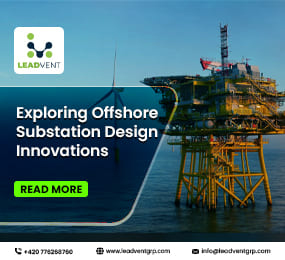
The rapid expansion of the offshore wind industry has necessitated a parallel revolution in power electronics and structural engineering. At the center of this shift is the offshore substation—the "beating heart" of a wind farm—which collects power from multiple turbines, increases the voltage, and transmits it efficiently to shore. As the industry moves further from the coastline into deeper waters, the design and function of these substations have undergone a dramatic evolution.
Initially, offshore substations were simple, fixed-bottom structures, typically utilizing "jackets" or monopiles similar to those used in the oil and gas industry. These were sufficient for shallow-water projects near the shore. However, as the quest for higher wind speeds pushed developers into waters deeper than 60 meters, fixed foundations became economically and technically prohibitive. This challenge birthed the next generation of infrastructure: the floating substation.
Floating substations represent a paradigm shift in renewable energy logistics. By utilizing semi-submersible, spar, or tension-leg platforms, these units can be deployed in deep-ocean environments where traditional foundations cannot reach. This evolution is critical for unlocking the massive wind potential of regions like the U.S. West Coast, parts of the Mediterranean, and Japan. Beyond depth, floating technology offers the advantage of modularity; these substations can be largely assembled in shipyards and towed to the site, reducing the risks and costs associated with complex offshore construction.
Furthermore, the integration of High-Voltage Direct Current (HVDC) technology within these substations is becoming standard for long-distance transmission, significantly reducing energy dissipation. As environmental monitoring and automated maintenance systems become more sophisticated, these substations are evolving into autonomous hubs of the blue economy. Ultimately, the transition from fixed to floating substations is not just a change in buoyancy, but a vital step toward a truly global and scalable renewable energy network.
Visit our website to know more: https://www.leadventgrp.com/events/2nd-annual-offshore-and-floating-substations-forum/details
For more information and group participation, contact us: [email protected]
Leadvent Group - Industry Leading Events for Business Leaders!
www.leadventgrp.com [email protected]




Comment