

Risk vs Resilience: What Modern Supply Chains Must Prioritize
In recent years, supply chains have faced constant disruption. From geopolitical conflicts to raw material shortages and sudden demand shifts, businesses are learning that stability cannot be taken for granted. What once worked as a cost-focused, efficiency-driven model is no longer enough.
Today, organisations are asking an important question: Should the focus be on managing risk or building resilience?
The answer is not about choosing one over the other. It is about understanding how both work together—and where priorities should shift in a fast-changing environment.
Understanding Risk in Supply Chains
Risk in supply chains refers to the possibility of disruptions that can affect operations, costs, or delivery timelines. These risks can come from both internal and external factors.
A structured approach to Supply Chain Risk Management helps organizations identify, assess, and respond to these uncertainties before they escalate.
Common Sources of Risk
- Supplier dependency or single sourcing
- Transportation delays and logistics issues
- Regulatory and compliance changes
- Natural disasters and climate disruptions
- Cybersecurity threats
Many companies still focus heavily on predicting and preventing these risks. While this is necessary, it is no longer sufficient on its own.
What is Supply Chain Resilience?
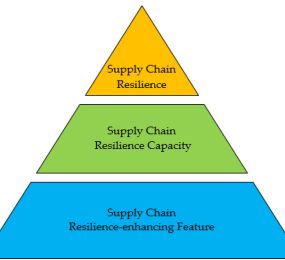
Resilience goes beyond risk prevention. It focuses on the ability to adapt, recover, and continue operations even when disruptions occur.
Instead of asking, “How do we avoid disruption?”, resilience asks,
“How quickly can we respond and recover when disruption happens?”
Key Elements of Resilience
- Flexibility in sourcing and production
- Real-time visibility across the supply chain
- Strong supplier relationships
- Scenario planning and contingency strategies
- Agile decision-making processes
Resilience ensures that even when a Supply Chain Risk Event occurs, the business can maintain continuity with minimal impact.
Risk vs Resilience: The Key Difference
While risk management and resilience are closely connected, they serve different purposes.
| Aspect | Risk Management | Resilience |
| Focus | Prevention | Adaptation & recovery |
| Approach | Identify and reduce risks | Build systems that handle disruptions |
| Timeline | Before disruption | Before, during, and after disruption |
| Goal | Avoid failure | Sustain operations despite failure |
The modern supply chain requires both, but the balance is shifting toward resilience.
Why Traditional Risk Management is Not Enough
Many organisations still rely on static risk models. These models often fail because they cannot keep up with real-time changes.
Limitations of Traditional Approaches
Over-reliance on historical data
Lack of real-time visibility
Slow response times
Limited supplier diversification
In today’s environment, risks are more complex and interconnected. A disruption in one region can quickly affect global operations.
This is why focusing only on Supply Risk Chain strategies is not enough. Businesses must build systems that can absorb shocks and continue functioning.
Why Resilience is Becoming a Priority
Resilience is now seen as a competitive advantage rather than just a defensive strategy.
Key Reasons Organizations are Shifting Focus
- Increased Frequency of Disruptions
Global supply chains face more frequent and unpredictable challenges. - Customer Expectations
Customers expect consistent delivery, even during disruptions. - Regulatory Pressure
Governments are emphasizing supply chain transparency and reliability. - Business Continuity Needs
Downtime directly impacts revenue and brand reputation.
How to Build a Resilient Supply Chain
Building resilience requires a combination of strategy, technology, and collaboration.
1. Diversify Supplier Base
- Avoid dependence on a single supplier or region
- Develop backup suppliers in different geographies
2. Invest in Real-Time Visibility
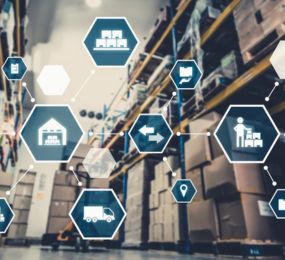
- Use digital tools for tracking inventory and shipments
- Enable faster decision-making with accurate data
3. Strengthen Collaboration
- Build long-term relationships with suppliers
- Share data and forecasts for better coordination
4. Implement Scenario Planning
- Prepare for multiple disruption scenarios
- Test response strategies regularly
5. Adopt Flexible Operations
- Enable quick shifts in production and logistics
- Maintain buffer inventory where necessary
Balancing Risk and Resilience
Organisations should not eliminate risk management. Instead, they should integrate it with resilience planning.
A Balanced Approach Includes:
- Proactive risk identification
- Continuous monitoring of supply networks
- Adaptive response systems
- Cross-functional coordination
This approach ensures that businesses are not only prepared for disruptions but also capable of recovering quickly.
Role of Technology in Strengthening Resilience
Technology plays a critical role in modern supply chains.
Key Technologies Driving Change
- Artificial Intelligence for demand forecasting
- Predictive analytics for risk assessment
- Blockchain for transparency and traceability
- IoT for real-time tracking
These tools help organizations move from reactive responses to proactive decision-making.
Leadership Perspective: What Should Be Prioritised?
Leaders must shift their mindset from short-term efficiency to long-term sustainability.
Key Questions for Decision Makers
- Are supply chains dependent on limited sources?
- Is there visibility across all tiers of suppliers?
- How quickly can operations recover from disruption?
- Are teams equipped to handle unexpected challenges?
Answering these questions helps define where resilience needs to be strengthened.
Conclusion: Moving Toward Resilient Supply Chains
The debate between risk and resilience is no longer about choosing one over the other. Modern supply chains must combine both, with a stronger emphasis on resilience.
Businesses that invest in adaptability, visibility, and collaboration are better positioned to handle disruptions and maintain continuity.
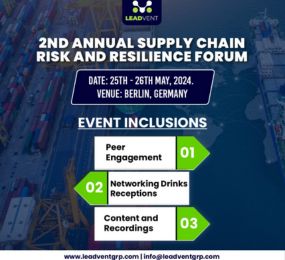
Industry forums like the 3rd Annual Supply Chain Risk and Resilience Forum organised by Leadvent Group on 10th & 11th June , 2026, at the Steigenberger Airport Hotel Amsterdam play a key role in shaping this conversation. They bring together industry leaders to share insights, strategies, and real-world experiences on building stronger and more reliable supply chains.
As disruptions continue to evolve, resilience will define which organisations succeed and which struggle to keep up.
FAQs
1. What is the difference between supply chain risk and resilience?
Supply chain risk focuses on identifying and reducing potential disruptions, while resilience focuses on the ability to adapt and recover when disruptions occur.
2. Why is resilience important in modern supply chains?
Resilience ensures business continuity, reduces downtime, and helps organizations maintain customer trust during unexpected disruptions.
3. How can companies improve supply chain resilience?
Companies can improve resilience by diversifying suppliers, investing in real-time visibility tools, strengthening partnerships, and implementing scenario planning strategies.









Comment