

Powering Progress Beyond the Roads: A Closer Look at Non-Road Mobile Machinery (NRMM)
When we think of engines and emissions, most minds go straight to cars and trucks. But across construction sites, farms, airports, and industrial zones, a different category of machines keeps the work moving quietly yet critically. These are known as Non-Road Mobile Machinery (NRMM), and their role in modern economies is both powerful and often overlooked.
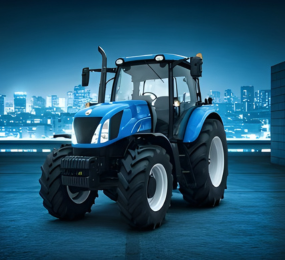
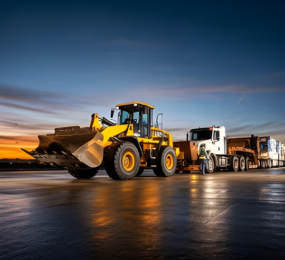
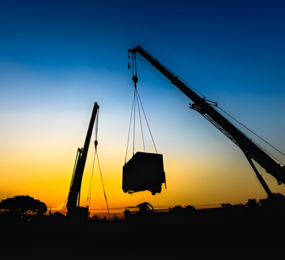
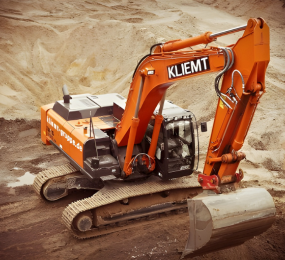
NRMM includes equipment such as excavators, bulldozers, cranes, tractors, forklifts, generators, and even airport ground vehicles. Unlike on-road vehicles, these machines don’t operate on public highways, but they are the backbone of vital sectors like agriculture, mining, construction, logistics, and infrastructure development.
Why NRMM Matters
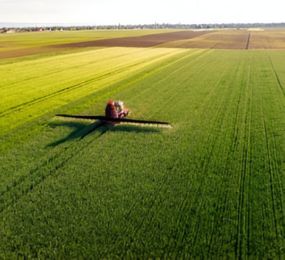
In many industries, time is money. NRMM helps deliver efficiency, strength, and capability in jobs that demand precision and power. For example, in construction, machines like backhoes and graders help build roads, bridges, and buildings. In agriculture, tractors and harvesters support food production and land management.
Without NRMM, productivity in these sectors would drop drastically. But alongside their usefulness, there's a growing awareness of their environmental and health impact.
The Environmental Challenge
The engines in NRMM typically run on diesel, which emits nitrogen oxides (NOx), particulate matter (PM), and carbon dioxide (CO?). Unlike road vehicles, NRMM has traditionally faced fewer regulations meaning many machines in use are outdated and highly polluting.
In cities and communities near active construction zones or ports, NRMM emissions contribute significantly to poor air quality. This has sparked action across Europe, North America, and increasingly in Africa and Asia, where development is accelerating.
Governments and industries are now under pressure to adopt cleaner technologies, enforce emission standards, and phase out older machinery. The conversation is shifting from simply using machines to using them responsibly.
Steps Toward Sustainability
The push for low-emission NRMM is gaining ground. Manufacturers are developing cleaner engines and alternative powertrains like hybrid and fully electric machines. Battery-powered construction equipment is already in use in some urban projects, where noise and emissions must be minimized.
Additionally, emissions regulations such as the EU Stage V and U.S. Tier 4 standards are forcing change across global supply chains. While compliance may be costly in the short term, the long-term benefits healthier air, lower fuel costs, and stronger environmental credibility make it worthwhile.
Emerging economies are also exploring green public procurement and retrofitting programs to ensure their NRMM fleets don't compromise environmental progress.
Takeaway Point:
Non-Road Mobile Machinery powers key sectors that shape daily life, but it must now evolve to meet today’s environmental expectations. Cleaner engines, tighter regulations, and smarter technologies are leading the charge proving that even off the road, sustainable progress is possible.
Learn more on our website: https://www.leadventgrp.com/event/2nd-annual-non-road-mobile-machinery-electrification-and-decarbonization-forum/register
For more information and group participation, contact us: [email protected]
Leadvent Group - Industry Leading Events for Business Leaders!
www.leadventgrp.com | [email protected]






Comment