

Future Trends Shaping the Submarine Power Cable and Interconnection Market
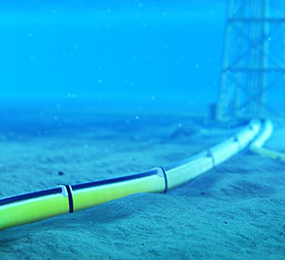
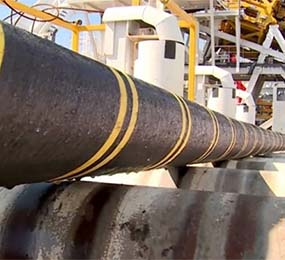
The global transition toward a decarbonized economy is placing an unprecedented spotlight on the seabed. As nations race to meet net-zero targets by 2050, the submarine power cable and interconnection market is evolving from a niche infrastructure segment into the literal backbone of the global energy transition.
Several key trends are currently redefining this landscape:
1. The Shift to Extra-High Voltage DC (HVDC)
As offshore wind farms move further into deeper waters—often exceeding 100km from the shore—traditional Alternating Current (AC) cables face significant transmission losses. The market is rapidly shifting toward High Voltage Direct Current (HVDC) technology. HVDC cables allow for efficient, long-distance power transport with minimal energy dissipation, enabling the creation of "super-grids" that connect different continental energy markets.
2. Multi-Terminal DC (MTDC) Grids and "Energy Islands"
The industry is moving away from simple point-to-point connections. Future trends point toward Multi-Terminal DC grids, where multiple offshore wind farms and various countries are linked through a single integrated network. Pioneering projects like Denmark’s "Energy Islands" act as offshore hubs, collecting power from hundreds of turbines and distributing it to multiple neighboring nations simultaneously.
3. Smart Cables and AI-Driven Monitoring
Sustainability isn't just about the energy carried; it's about infrastructure resilience. The integration of Distributed Fiber Optic Sensing (DFOS) allows cables to "feel" their environment. By embedding fiber optics within power cables, operators can monitor temperature shifts and mechanical strain in real-time. Artificial Intelligence (AI) is then used to predict potential faults or identify damage from ship anchors before a blackout occurs.
4. Sustainability in Manufacturing
The "Clean Beauty" philosophy is entering heavy industry. Manufacturers are now prioritizing circular economy models, utilizing lead-free sheathing and recyclable thermoplastic insulation (like XLPE alternatives). These materials reduce the environmental footprint during the cable’s 40-year lifespan and simplify decommissioning.
Visit our website to know more: https://www.leadventgrp.com/events/6th-annual-submarine-power-cable-and-interconnection-forum/details
For more information and group participation, contact us: [email protected]
Leadvent Group - Industry Leading Events for Business Leaders!
www.leadventgrp.com| [email protected]







Comment