

Floating Wind: Unlocking Offshore Energy Potential
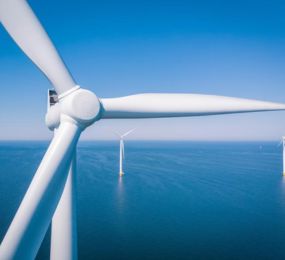
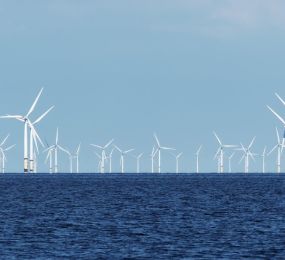
As the world accelerates its move toward renewable energy, offshore wind is taking center stage. Traditionally, offshore wind farms have been built on fixed-bottom foundations, limiting their deployment to shallow waters near coastlines. But much of the world’s strongest and most consistent wind resources lie farther out at sea, where depths make traditional foundations impossible. This is where floating wind technology is breaking new ground.
What Is Floating Wind?
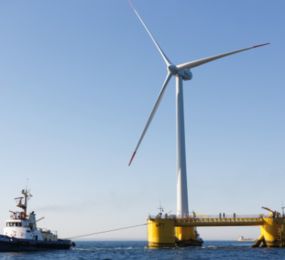
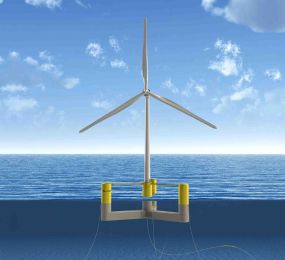
Floating wind involves turbines mounted on floating structures, anchored to the seabed with mooring lines. Unlike fixed-bottom turbines, which are restricted to depths of around 50 meters, floating platforms can be installed in waters over 1,000 meters deep. This opens vast areas of untapped offshore wind potential across regions such as the Mediterranean, Atlantic, and parts of Asia-Pacific.
Why Floating Wind Matters
The significance of floating wind lies in its ability to access stronger, more stable wind resources in deeper waters. These winds generate more electricity and improve the efficiency of renewable power production. By expanding offshore wind capacity, floating wind can play a critical role in helping countries meet net-zero targets and reduce reliance on fossil fuels.
Furthermore, floating wind reduces the competition for nearshore space, which is increasingly contested by shipping lanes, fishing industries, and coastal communities. By moving turbines farther out to sea, it eases land-use pressures while maintaining access to clean, renewable energy.
Technological Advancements
Floating wind technology is still evolving but has made significant strides. Several types of floating platforms such as semi-submersible structures, spar buoys, and tension leg platforms are being tested and deployed. Each design offers solutions for stability, cost efficiency, and adaptability to different marine environments.
Pilot projects in Europe, particularly in the North Sea and along the coasts of Norway and Portugal, have already proven the feasibility of floating wind. Scaling up production and improving supply chains are now the industry’s next big steps.
Opportunities and Challenges
Floating wind presents enormous opportunities. It could unlock gigawatts of renewable capacity globally, create jobs in manufacturing and marine engineering, and strengthen energy security by diversifying supply. Countries with limited shallow waters, such as Japan and South Korea, see floating wind as a cornerstone of their renewable strategies.
Yet challenges remain. The technology is still more expensive than fixed-bottom offshore wind, and large-scale deployment requires significant investment in infrastructure, ports, and supply chains. Environmental and ecological considerations, including marine biodiversity and fishing activity, also need careful management.
Looking Ahead
Despite these hurdles, floating wind is quickly moving from concept to reality. As costs fall and experience grows, it is expected to become a central pillar of the global renewable energy mix. Governments, investors, and developers are increasingly recognizing that floating wind offers not just a new technology, but a long-term solution to harnessing offshore energy where fixed-bottom turbines cannot go.
Takeaway Point: Floating wind opens the door to vast untapped offshore energy resources. While challenges of cost and scale remain, it has the potential to transform global renewable power generation and accelerate the path to net zero.
Learn more on our website: https://www.leadventgrp.com/event/6th-annual-floating-wind-europe/register
For more information and group participation, contact us: [email protected]
Leadvent Group - Industry Leading Events for Business Leaders!
www.leadventgrp.com | [email protected]






Comment