

E-Fuels: Bridging the Gap to Sustainable Energy
As the world races to cut greenhouse gas emissions and meet ambitious climate targets, E-fuels have emerged as a promising alternative in the complex transition to cleaner energy. While battery-powered electric vehicles (EVs) and renewable electricity often dominate the headlines, e-fuels offer a practical, scalable solution especially for sectors where electrification is not yet feasible.
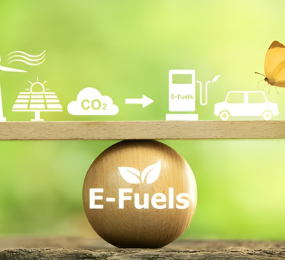
So, what are e-fuels? Also known as electrofuels, e-fuels are synthetic fuels produced by combining green hydrogen (made via electrolysis using renewable electricity) with captured carbon dioxide (CO?). The result is a liquid fuel that can be used in conventional combustion engines, ships, planes, and even industrial processes with a significantly lower carbon footprint.
One of the greatest advantages of e-fuels is their compatibility with existing infrastructure. They can be stored, transported, and used in the same way as traditional fossil fuels, making them particularly attractive for industries that rely on long-distance logistics or energy-dense fuels like aviation, shipping, and heavy-duty trucking.
This ease of integration is what makes e-fuels especially relevant for regions like Africa, where transitioning completely to electric vehicles or building new renewable infrastructure may take time. E-fuels offer a middle ground enabling progress on emissions without waiting for a full technological overhaul.
However, e-fuels are not without their challenges. At present, they are cost-intensive to produce, and large-scale commercial availability is still in its early stages. But with investment pouring into green hydrogen projects and carbon capture technology, the production of e-fuels is expected to become more efficient and affordable in the coming decade.
Several countries, especially in Europe, are already paving the way. Germany, for instance, is investing heavily in e-fuel research and pilot plants, aiming to make them a cornerstone of its transport decarbonization strategy. Meanwhile, global automakers and airlines are beginning to include e-fuels in their long-term sustainability plans.
That said, it's important to see e-fuels not as a silver bullet, but as a complementary part of a broader clean energy strategy. While electrification and renewable power should remain a primary focus, e-fuels offer critical support where other technologies fall short.
Takeaway Point:
E-fuels present a realistic and innovative path to reducing emissions in hard-to-abate
sectors, all while using existing fuel infrastructure. As costs come down and production scales up, they could become a key part of the global climate solution particularly where immediate electrification isn’t viable.
Learn more on our website: https://www.leadventgrp.com/event/2nd-annual-world-e-fuels-summit/register
For more information and group participation, contact us: [email protected]
Leadvent Group - Industry Leading Events for Business Leaders!
www.leadventgrp.com | [email protected]










Comment