

Agrivoltaics vs Conventional Solar Farms
As renewable energy targets accelerate, developers face a difficult strategic question: how can solar capacity expand without placing additional pressure on productive agricultural land?
Conventional solar farms have already proved their value as a reliable source of clean electricity. Yet they often dedicate land exclusively to energy generation. Agrivoltaics offers a different model by combining solar power with continued agricultural activity on the same site.
For investors, developers, policymakers, utilities, and landowners, the decision is no longer based only on electricity output. Long-term value also depends on land efficiency, operational resilience, environmental performance, regulatory support, and community acceptance.
Why Agrivoltaics Is Changing Solar Investment Decisions
Conventional solar farms are built primarily to maximise electricity generation. Their engineering models, construction methods, financing structures, and maintenance requirements are well established.
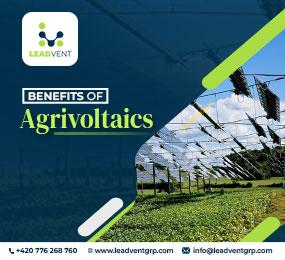
Agrivoltaics takes a broader approach. Solar panels are designed around farming activity so that crops, livestock, or other agricultural uses can continue beneath or between the installations.
This dual-use model is particularly relevant in regions where land availability is limited or where planning authorities are under pressure to balance energy expansion with food production.
The strongest Agrivoltaics projects are not simply solar farms placed above crops. They require careful coordination between energy developers, agricultural specialists, landowners, technology providers, and policymakers.
Comparing the Long-Term Value
Land Productivity Creates a Strategic Advantage
The clearest difference between the two models is how the land generates value.
A conventional solar farm usually creates revenue through electricity production alone. An agrivoltaic site may support both energy generation and agricultural output, provided the system is suited to local crops, climate, soil conditions, and farming practices.
This does not guarantee higher returns in every case. Project economics depend on installation costs, crop performance, electricity prices, permitting requirements, and long-term operating expenses.
However, where agricultural activity can continue successfully, agri-solar pv can improve total land productivity and reduce conflict between food and energy priorities.
Operational Flexibility Strengthens Resilience
Long-term infrastructure decisions must account for changing market conditions.
Electricity prices fluctuate. Agricultural priorities shift. Regulations evolve. Climate pressures influence both crop production and energy demand.
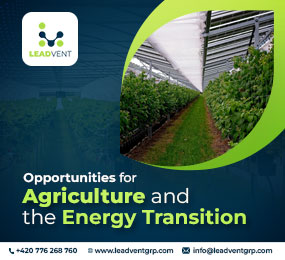
Agrivoltaic systems can offer greater flexibility because they support more than one commercial objective. A project may combine electricity generation with crop cultivation, livestock grazing, biodiversity measures, or land-management programmes.
This flexibility can help organisations reduce dependence on a single revenue stream and respond more effectively to changing commercial conditions.
Environmental Value Goes Beyond Clean Energy
Both conventional solar farms and Agrivoltaics contribute to renewable energy production.
Agrivoltaic projects may also support broader environmental goals, including soil protection, water management, biodiversity initiatives, and agricultural resilience. In some settings, partial shading can reduce heat exposure or water loss for selected crops.
These benefits are site-specific and should not be treated as universal outcomes. Feasibility studies remain essential.
Nevertheless, the potential to combine energy generation with responsible land stewardship makes Agrivoltaics increasingly relevant to investors and corporate leaders assessing long-term sustainability performance.
Where Conventional Solar Farms Still Perform Better
Agrivoltaics is not automatically the strongest option for every project.
Conventional solar farms continue to offer important advantages:
- Simpler engineering and construction
- Established financing structures
- Proven maintenance practices
- Faster deployment
- Lower operational complexity
- Clearer performance forecasting
Where land is abundant, agricultural value is low, or the primary goal is rapid utility-scale electricity generation, conventional solar may offer the stronger commercial case.
The decision should therefore be based on project objectives rather than industry momentum.
What Executives Should Evaluate Before Investing
Senior decision-makers should assess both energy performance and wider business value.
Key questions include:
- Can farming continue without reducing project efficiency?
- Are the selected crops suitable for partial shading?
- How complex will maintenance and agricultural access become?
- What planning or permitting requirements apply?
- Will the project improve community acceptance?
- Can strategic partnerships reduce technical or financial risk?
- Does the model provide a clear competitive advantage over the full project lifecycle?
These questions help leaders compare total value rather than focusing only on installed solar capacity.
Collaboration Will Determine Project Success
Agrivoltaic development requires cooperation across sectors that have not always worked closely together.
Solar developers understand energy systems. Farmers understand land, crops, and seasonal operations. Investors focus on risk and return. Policymakers assess planning, food security, and renewable energy goals.
Successful projects depend on aligning these priorities early.
An agrivoltaics conference can therefore offer significant value by bringing key decision-makers, technical experts, project developers, landowners, researchers, and investors into the same discussion.
The most valuable conversations often happen beyond formal presentations. A senior executive may identify a technology partner during a networking session, compare financing approaches with another developer, or gain practical industry insights from a project owner facing similar challenges.
These interactions can lead to strategic partnerships that would be difficult to establish through desk research alone.
Decide with Better Insight, Not Assumptions
Neither Agrivoltaics nor conventional solar farms deliver superior value in every situation.
Conventional solar remains highly effective where rapid deployment, simpler operations, and maximum energy production are the primary goals.
Agrivoltaics offers a broader long-term proposition where land productivity, agricultural continuity, sustainability, and stakeholder acceptance matter alongside electricity generation.
The right decision depends on location, project economics, agricultural suitability, regulatory conditions, and long-term business objectives.
For executives seeking deeper insight into these issues, the 5th Annual Agrivoltaics Europe organised by Leadvent Group provides a focused platform for discussion, networking, and strategic exchange.
The event is designed for C-level executives, senior managers, directors, developers, investors, utilities, technology providers, policymakers, agricultural specialists, and corporate leaders seeking high-value industry intelligence and strategic partnerships.
Discussions will explore project design, policy development, financing, crop compatibility, land-use optimisation, technology innovation, operational challenges, and the commercial future of agri-solar pv.
Explore the 5th Annual Agrivoltaics Europe programme and register to meet the key decision-makers, keynote speakers, and industry leaders shaping the next phase of dual-use solar development.
Frequently Asked Questions
- Is Agrivoltaics more profitable than a conventional solar farm?
Agrivoltaics may create additional value by combining agricultural activity with energy generation, but profitability depends on system design, crop suitability, installation costs, electricity prices, and operating complexity. Conventional solar may deliver stronger returns where land is inexpensive and the project is focused exclusively on energy production.
- Who should attend an agrivoltaics conference?
An agrivoltaics conference is relevant for C-level executives, project developers, investors, utilities, farmers, landowners, policymakers, researchers, EPC contractors, and technology providers. It is especially useful for leaders evaluating dual-use projects, seeking strategic partnerships, or comparing regulatory, financial, and technical approaches across markets.
- What should executives look for in a Photovoltaics event?
Executives should prioritise a Photovoltaics event that offers practical case studies, senior-level speakers, structured networking, policy insight, technical expertise, and access to potential partners. The strongest events help attendees compare business models, assess project risks, and make informed investment or development decisions.
- How can companies measure the ROI of attending the conference?
Conference ROI can be evaluated through the quality of meetings secured, relevant contacts made, strategic partnerships initiated, market intelligence gained, and follow-up opportunities created. Executives should define clear objectives before attending, identify priority stakeholders, and track commercial discussions after the event.






Comment