
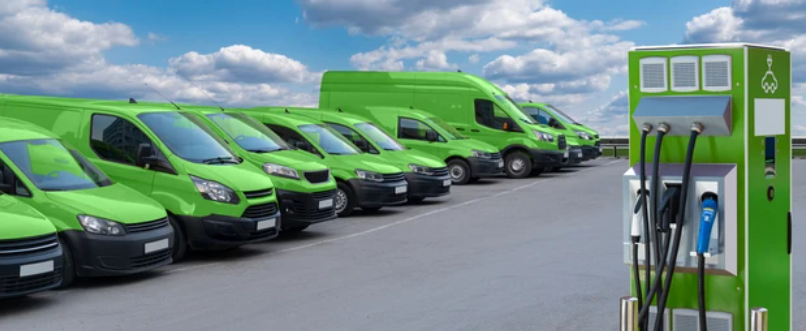
About The Event (#fleetelectrification)
Fleet electrification is rapidly becoming one of Europe’s most powerful levers for cutting emissions, reducing operating costs and strengthening its industrial base. With corporate fleets representing around 60% of new vehicle registrations, the shift to electric mobility is central to Europe’s economic and climate ambitions. As global competition intensifies, particularly with China’s highly coordinated industrial strategies, Europe must scale fleet electrification to safeguard its competitive position. By providing predictable demand, corporate fleets can reinforce Europe’s automotive supply chains, accelerate innovation and help secure industrial leadership in zero emission mobility.
The fleet electrification and decarbonization market is growing rapidly, driven by government incentives, falling EV costs, and corporate sustainability goals. Key trends include a shift in fleets like corporate and delivery vehicles to electric, with forecasts predicting substantial market growth and significant reductions in oil consumption and emissions. Challenges remain, such as infrastructure development, but advancements in battery technology and falling total cost of ownership (TCO) are making electrification increasingly feasible.
The Fleet Electrification and Decarbonisation Forum is a premier international platform bringing together fleet operators, transport authorities, energy providers, and technology innovators to drive the transition toward low-emission mobility.
As transport emissions remain a major contributor to global carbon output, fleet electrification has become a cornerstone of corporate and governmental decarbonisation strategies. From passenger vehicles and public buses to heavy-duty logistics, this forum provides the insights and solutions needed to achieve cleaner, smarter, and more cost-efficient fleet operations.
Through keynote presentations, case studies, and interactive panel discussions, participants will explore the latest developments in electric vehicle (EV) adoption, charging infrastructure, energy management, and policy frameworks shaping the future of sustainable transport.
Fleet electrification presents the next industrial and climate inflection point for transport in Europe. Decisive action can help to secure a leading role for Europe in clean mobility, delivering tangible benefits for citizens and businesses, and ensuring a competitive and resilient transition.
The Fleet Electrification and Decarbonisation Forum serves as a catalyst for innovation, collaboration, and investment in next-generation fleet solutions—empowering industries and cities to meet their net-zero goals.
Read more
35+
Speakers

150+
Attendees

10+
Sponsors
Event Partners
Our Sponsors and Partners
Leadvent Startup Innovate
Get your solution and product noticed by showcasing your tech products and pitching to a large-scale targeted audience.
There are two ways to participate in Startup Innovate: either as a paid exhibitor or Free marketing partner. As a marketing partner, you will be required to announce the event on your company website, release article about the event, release email marketing campaigns to reach out for potential delegates and send dedicated social media posts on Linkedin , Twitter& other SM handle. Learn more.
EVENT ORGANIZER

Event Details
About the event
The global fleet electrification market size was reached at USD 93.25 billion in 2024 and is expected to be worth around USD 224.51 billion by 2034, growing at a compound annual growth rate (CAGR) of 9.20% over the forecast period from 2025 to 2034. The electrification and optimization of fleets is shifting from a health and safety prerogative – mainly focused around air quality – to a decarbonization priority for many businesses. Sectors with a high proportion of fleet emissions, such as postal services, telecommunications and consumer goods, are setting ambitious reduction targets, and adopting different levers to decarbonize their fleets – ranging from optimizing existing fleets to purchasing electric vehicles (EVs) and sustainable fuels. This report identifies tech solutions and innovations in the fleet decarbonization market, as well as new business models, and examines how they are evolving.
Fleet transport plays an outsized role in Europe’s mobility landscape. These cars, vans and heavy duty models cover more kilometres, generate a significant share of road transport emissions, and refresh their stock more frequently than private users.
As 60% of new vehicle sales in the EU come from fleets, this makes corporate mobility a powerful catalyst for change. Businesses that switch to cleaner models can unlock substantial operating cost reductions, while also supporting the wider energy system through managed charging and, in time, vehicle to grid services. The transition is therefore both a climate necessity and a strategic business opportunity.
The integration of electric vehicles (EVs) into fleets is likely to grow due to sustainability initiatives, carbon reduction policies, and the changing total cost of ownership (TCO) benefits associated with EVs. Public transport as well as logistics and corporate fleets are now receiving government subsidies and tax breaks alongside infrastructure development for the transition from internal combustion engine (ICE) buses and vans to electric counterparts. The economic and operational efficiency of EV fleets is improving alongside advancements in battery technology, vehicle range capabilities, and charging stations. Moreover, meeting ESG (Environmental, Social, and Governance) criteria and decarbonization pressures are prompting major corporations and logistics companies to embrace electric vehicles, thereby deepening market penetration and strengthening sustained growth momentum.
Due to the increase in sustainability goals, cost-efficiency, and lower carbon emissions, companies are adopting electric vehicles (EVs) which is driving the growth of the fleet electrification market. The market includes the purchase of electric vehicles, charging infrastructure, and fleet management systems. Further advancements are being propelled by cross-industry collaboration between automotive, technology, and energy companies. The logistics, transit, and corporate sectors that used to rely on gasoline-powered fleets are now able to leverage EV technologies. Increased government subsidies, reduced battery costs, stricter environmental policies, and added regulations further support the motivation to invest in this market. The transformational paradigm shift involved in replacing business fleets is poised to disrupt the entire industry while aiding in the world’s net-zero emission goals.
The fleet electrification market is driven by the growing emphasis of fleet owners for adopting electric vehicles to lower emission coupled with rapid expansion of the EV charging infrastructure in different parts of the world. Fleet electrification refers to the transition of municipal, commercial, and corporate vehicle fleets from internal combustion engines (ICE) to electric powertrains. There are several types of vehicles adopted by fleet operators including electric light commercial vehicles (LCV) / vans, electric medium-duty trucks (MDV), electric heavy-duty trucks (HDV), electric buses, two-/three-wheeler cargo EVs, off-road / specialty fleet vehicles and some others. These vehicles are powered by different types of batteries consisting of lithium iron phosphate (LFP), nickel manganese cobalt (NMC), nickel cobalt aluminum (NCA), solid-state batteries and some others. It finds application in various sectors comprising of logistics & delivery fleets, public transit & municipal fleets, corporate & utility fleets, ride-hailing & shared mobility fleets, airport & port service fleets and some others. This market is expected to rise significantly with the growth of the overall automotive sector across the globe.
The Fleet Electrification and Decarbonisation Forum is the premier global platform dedicated to advancing clean, efficient, and low-carbon transportation. As one of the key enablers of global decarbonisation, fleet electrification is reshaping how passenger, commercial, and logistics operations are powered and managed in the transition toward a net-zero future.
The forum will bring together fleet operators, government transport agencies, energy providers, OEMs, and technology innovators committed to accelerating the adoption of electric and alternative-fuel fleets. Participants will explore strategies to overcome technical, economic, and infrastructural challenges while uncovering opportunities for innovation and collaboration across the mobility ecosystem.
Over two days, attendees will engage in high-level presentations, interactive panel discussions, and practical case studies focused on EV adoption pathways, charging and grid infrastructure, total cost of ownership, smart fleet management, renewable integration, and evolving policy frameworks supporting large-scale deployment.
Key industry leaders and experts will share insights, best practices, and success stories to help organizations achieve measurable progress in their fleet electrification and sustainability goals. The focused and collaborative nature of the event ensures deep engagement, active participation, and exceptional networking opportunities among all attendees.
The Fleet Electrification and Decarbonisation Forum offers the ideal setting for connecting decision-makers, practitioners, and innovators from across the global transport and energy value chains — fostering partnerships, sharing experiences, and advancing the collective transition toward cleaner, smarter, and more connected mobility systems.
Explore
Explore our Event & Matchmaking App and Improve your Interaction at Leadvent Group Conference Schedule your meetings in advance!
At the Leadvent Group conference you can request and organize your appointments by using a matchmaking app. Through the networking tool, each participant can create an individual profile. Guided by categories and keywords, attendees can search, find and approach interesting contacts. There will also be a networking area provided at the event of the conference. Your profile data and the details you provide are visible exclusively for registered participants within the event. You will oversee the information you would like to present and to whom. Our matchmaking app will be activated approximately one month prior to the conference and you will be notified vie e-mail as soon as you can start using the matchmaking App and can then set up your personal profile.


Hotel & Venue
We will confirm the venue approximately 3-6 weeks prior to the event date and we will negotiate discounted room rate for conference attendees
Join us in Amsterdam on the 18th - 19th November, 2026
Venue:
( TBA ) -
Address:
TBA, Amsterdam
Get Location









Our Clients Opinion
What Our Customers Say

Projects Developer / Asset Manager, aventron

Head Data Analytics & Business Excellence, Suzlon Global Services Limited


CISO Group Network Manager, Madison Insurance Kenya Limited

Partner, Everoze

Senior Electrical Engineer, Seaway Offshore Cables

EVP, Xfloat


Senior Associate, The Carbon Trust

Renewables MWS Director, Europe and London, ABL Group

Manager, Biomethane Development Office, Biomethane Development Office

CEO, Bore and Biogaz Vallée

Senior Advisor, Apricum Group

Senior Project Manager, Fichtner GmbH & Co. KG


CABLE DESIGN ENGINEER, DEME OFFSHORE NLBV