

Innovations in Anaerobic Digestion Technology
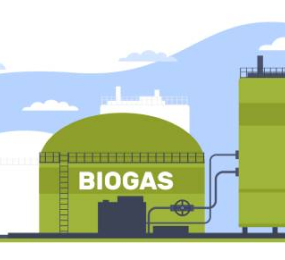
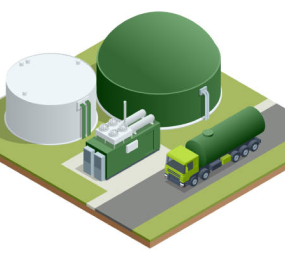
Anaerobic Digestion (AD), the natural process of breaking down organic matter without oxygen, is a cornerstone of the circular economy, efficiently converting waste streams into renewable biogas and nutrient-rich digestate. As demand for sustainable energy rises, innovation in AD technology is focused on enhancing three core areas: maximizing gas yield from diverse inputs, improving gas quality, and achieving operational flexibility.
A major focus area is feedstock pre-treatment. To process challenging materials like sewage sludge and lignocellulosic biomass (plant matter) more effectively, technologies such as Thermal Hydrolysis Process (THP) and enzymatic pre-treatment are gaining traction. THP uses high temperature and pressure to break down complex organic structures before they enter the digester.
This process dramatically increases the biodegradability of the feedstock, leading to faster digestion times, significantly higher methane yields, and reducing the volume of residual waste. This enables AD plants to use a wider variety of waste, improving overall resource recovery.
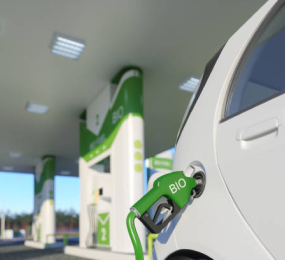
Secondly, the push toward upgrading biogas into pipeline-quality biomethane is driving innovation in gas cleaning. Advanced, less energy-intensive membrane separation technologies are replacing older amine scrubbing and water wash systems. These selective membranes efficiently filter out impurities, particularly carbon dioxide ($\text{CO}_2$), achieving the high purity levels required for injection into natural gas grids or use as vehicle fuel.
Finally, the industry is moving towards the integrated biorefinery model. This involves not just producing biogas, but also utilizing the captured $\text{CO}_2$. Through Power-to-Gas (P2G) concepts, surplus renewable electricity is used to convert the removed $\text{CO}_2$ into additional methane, effectively maximizing renewable fuel production and closing the carbon loop. Furthermore, the adoption of modular and decentralized digester systems is making AD viable in dense urban environments, moving waste processing closer to its source.
These innovations collectively transform AD plants into highly efficient, flexible, and sustainable energy and resource recovery hubs, cementing their role in a decarbonized energy future.
Visit our website to know more: https://www.leadventgrp.com/events/2nd-annual-biogas-biomethane-world-summit/details
For more information and group participation, contact us: [email protected]
Leadvent Group - Industry Leading Events for Business Leaders!





Comment